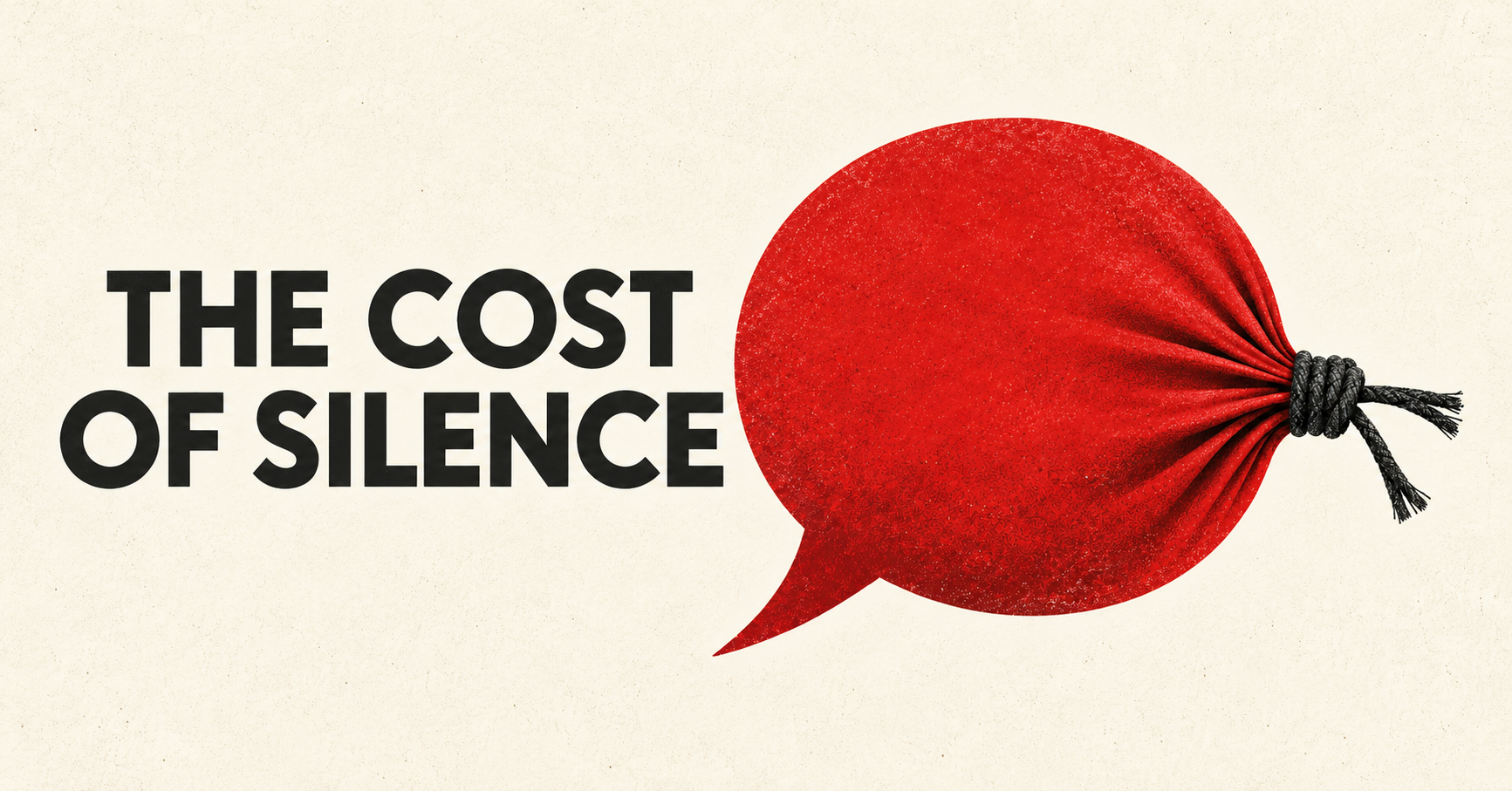
A blackmailer’s threat gains power when someone believes that the people around them will respond to exposure with punishment rather than support.
Key takeaways
- Silence can reflect fear of losing relationships, dignity or professional standing.
- The perpetrator remains responsible for the abuse. Our response can nevertheless strengthen or weaken their leverage.
- Men and women may face different expectations that make seeking help difficult.
- AI-generated intimate images can create threats even when someone has never shared intimate material.
- Families, friends and employers should make support credible before a crisis occurs.
A blackmailer can exploit the victim’s expectations of other people. Making it safer to ask for help is therefore part of resisting coercion.
The Threat Contains an Audience
Imagine receiving a message: ‘Do what I say, or I will send this to your family.’
The attachment could be a private / intimate photograph shared willingly earlier, a recording or a fabricated image. But the threat directs your attention beyond the material itself.
What will your partner think? Will your parents listen? Could colleagues start whispering? Will anyone believe your explanation?
The blackmailer supplies the threat. Your mind supplies you with the audience’s possible response. This is where an intimate threat acquires social power. You anticipate losing more than privacy. You fear losing your place among people whose acceptance matters.
Silence Feels Like the Safer Option
From outside, the question seems straightforward: why did the victim not tell someone?
Inside the situation, a different question may dominate: whom can I tell without making things worse? Embarrassment, shame, shock, remorse, and feeling overwhelmed are reasons people may delay reaching out about sextortion.
My argument is that we should examine the environment in which that silence becomes understandable.
A person may expect a parent to confiscate their phone, a partner to accuse them of betrayal or a manager to question their judgment. While these reactions are not inevitable, the fear of them can still shape a decision.
The blackmailer’s offer is cruelly persuasive: comply now, and perhaps the feared exposure can be postponed. That does not make the victim weak. It shows how coercion can narrow someone’s sense of available choices.
Fear of Social Judgment Becomes Leverage
Consider two possible responses to a disclosure.
‘Why would you send something like that?’
‘I’m glad you told me. Let’s work out what support you need.’
The first makes the person defend their conduct before receiving help. The second creates space to address the threat. There may eventually be difficult conversations about trust, relationships or decisions. But an interrogation in the first moment can reinforce the blackmailer’s claim that seeking help will bring punishment.
Responsibility for blackmail belongs to the perpetrator. That responsibility does not disappear because the victim trusted someone, shared an image or made a decision they regret.
Our separate responsibility concerns how we respond when someone brings us a threat. And even before that, be wary of requests that can create leverage against us in a relationship.
The Pressure to Look Respectable; Or Invulnerable
We should be careful about imagining a single kind of victim.
A woman may fear being judged for sexual behaviour while the person threatening her receives less scrutiny. A man may fear ridicule for having been deceived, or believe that admitting fear contradicts the strength others expect from him. A professional may worry that a private vulnerability will become a public verdict on competence and character.
These pressures vary between people, families and workplaces. They are questions worth examining rather than assumptions to impose on every case. What unites them is the possibility that asking for help will threaten an identity the person has worked hard to maintain.
If we demand that people always appear respectable, capable and in control, we should consider what happens when they need to admit that someone has gained power over them.
AI Challenges the Reassurance of Innocence
It is tempting to believe that avoiding intimate photographs removes the threat.
That reassurance has limits. Offenders can use AI to fabricate nude images or create sexual deepfakes and use them for extortion, or public shaming. A fabricated image creates the burden on the victim to explain something that never happened.
My concern is the audience’s response while authenticity remains uncertain. Will people pause or will they circulate it? Will an employer wait till the facts are established, or be compelled take action?
We need a standard that protects people whether material is authentic or fabricated. Even authenticity for that matter, does not grant permission to threaten someone or circulate their intimate material.
Support Must Become Believable Before it is Needed
‘Come to me if anything happens’ is a useful promise. Everyday behaviour determines whether someone believes it.
How do we discuss another person’s leaked photographs? Do we forward them? Make jokes? Ask why the person allowed themselves to be recorded? Or do we relate with the victim and ask ourselves what if we were there instead of them. As a responsible society, we can limit the distribution by not forwarding such material; and asking the sender to do the same.
How we treat someone else’s exposure tells those around us whether they can safely come to us for help.
Employers face a similar question. If an employee expects humiliation or automatic punishment, would they disclose coercion early enough for the organisation to respond?
I would like families and workplaces to rehearse that first conversation. Who listens? How is privacy protected? What happens next? What support can honestly be promised?
A credible route to help needs more than goodwill.
What We Make Possible
In Love Swipe Blackmail, published in 2021, I explored how private vulnerability can become leverage through deception and the threat of exposure.
The question extends beyond fiction: what makes another person’s threat powerful enough to govern someone’s choices?
Part of the answer can lie in the response the victim expects from everyone else. We cannot promise that disclosure will have no consequences. We can make a more meaningful promise: someone who seeks help will be heard, treated with dignity and supported through the next steps.
That promise becomes powerful when our behaviour makes it believable.
FAQs
Why do people stay silent about sextortion?
They may fear exposure, blame, relationship damage or professional consequences. Some also feel overwhelmed or unsure whom to trust. Silence should not be interpreted as agreement with the perpetrator.
Does sharing an intimate image make the victim responsible for blackmail?
Sharing material privately does not authorise threats or further distribution. Responsibility for coercion belongs to the person making the threats. But if the victim has received such a threat, that should trigger their caution.
Why might men find sextortion difficult to report?
The pressure to appear invulnerable, strong, and morally upright; and anticipation of public ridicule could be the reasons on the outside. While they may be struggling with embarrassment, shame, shock, remorse, and feeling overwhelmed on the inside. These expectations and feelings can make admitting manipulation difficult, although experiences differ between individuals.
Can someone face sextortion without sharing intimate images?
Offenders can use fabricated sexual images, including AI-generated material, to threaten someone. The threatened harm can concern how others might react to the fabrication.
How should I respond if someone tells me they are being blackmailed?
Listen calmly, avoid blame and ask what support they need. Help them seek appropriate reporting and specialist support. Do not request or circulate the intimate material.
Does supporting a victim mean approving every decision they have made?
Support means addressing coercion and protecting dignity. Questions about relationship conduct or other decisions can be considered separately, without making help conditional on moral approval.