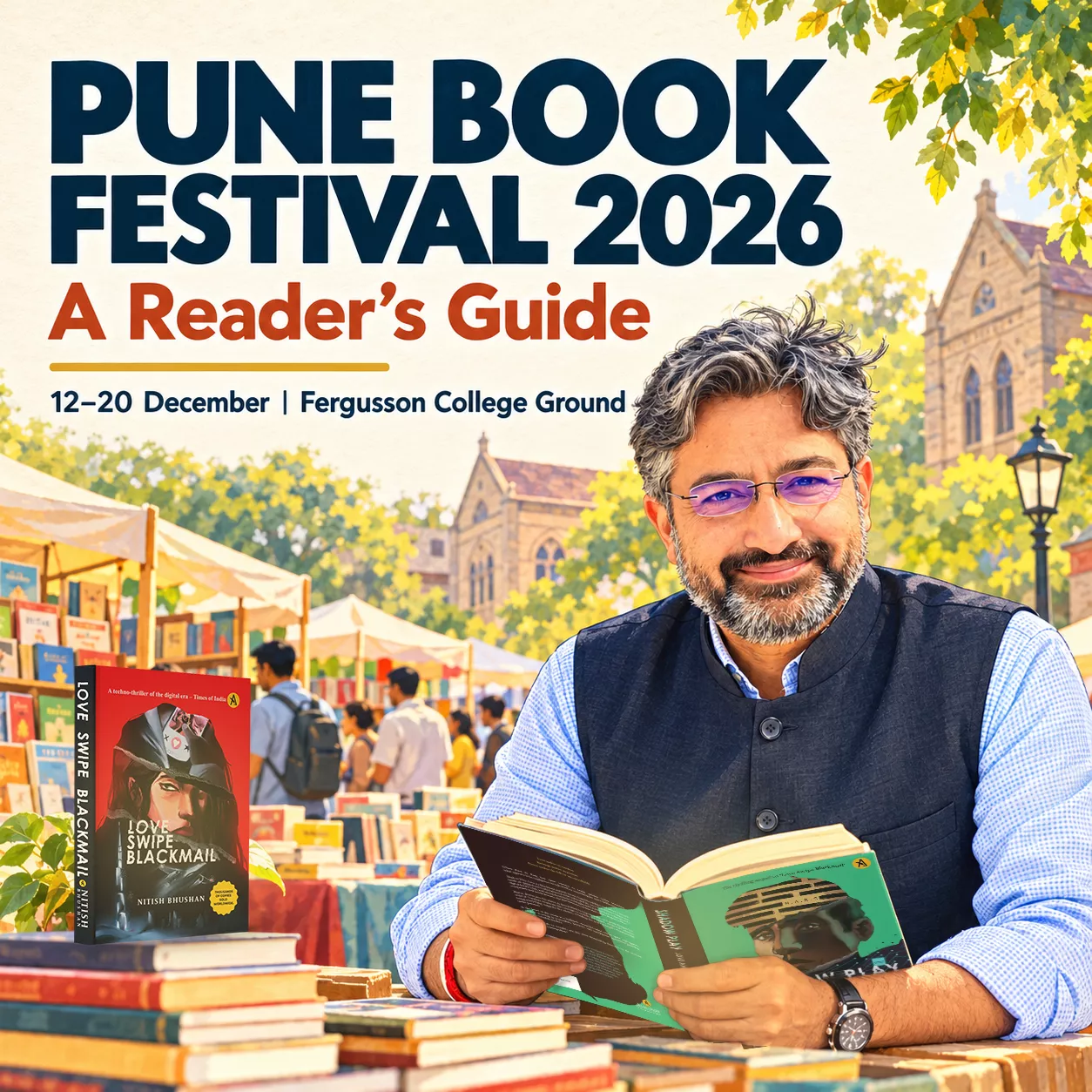
A book festival presents a pleasant problem. There are more books than you can browse, more subjects than you know you are interested in, and only so much room in the bag you brought along. The answer is not necessarily a bigger bag. Although that helps. It is to arrive with some intention and leave enough room for discovery.
Pune Book Festival 2026 will be held from 12 to 20 December at Fergusson College Ground, Pune. Organised by the National Book Trust, India, this will be the festival’s fourth edition.
For readers planning a visit, here is a guide to the essential details and to making the most of your time among the books.
Pune Book Festival 2026 at a glance
| Detail | Information |
| Festival | Pune Book Festival 2026 |
| Edition | Fourth |
| Dates | 12–20 December 2026 |
| Venue | Fergusson College Ground, Pune, Maharashtra |
| Organiser | National Book Trust, India |
| Visitor timings | Awaiting verified information for the 2026 edition |
| Entry fee and registration | Awaiting verified information for the 2026 edition |
| Programme and participating publishers | Check official announcements as the festival approaches |
Information checked on 17 October 2026. Visitor arrangements and programme details should be reconfirmed before travelling.
Why this Pune visit feels personal
I studied at SIBM Pune from 1999 to 2001, when the institute was on Senapati Bapat Road. Some of us rented a flat in Deep Bangla Chowk, and lovingly we called it the Bhai Niwas. Let me tell you there was also a Bhai Bike. And some of us, who were closer than the others, called ourselves Bhaizone. Student life had its own naming conventions.
I am hoping to return to Pune for the festival this December. The prospect carries the pleasure of discovering books and the anticipation of revisiting a city that holds an important part of my life.
But whether Pune is home, an old memory or somewhere you are visiting for the first time, the question is the same – how do you make a book festival your own?
Begin with what you want to discover
Before your visit, write down three things.
One book or author you want to find. This gives your visit a starting point.
One subject you want to understand better. It might be artificial intelligence, Indian history, nutrition, economics or something your child asked you about at dinner.
One kind of reading you rarely try. Perhaps poetry, translated fiction, biography or a short-story collection.
You now have a plan without turning the afternoon into a procurement exercise. If you are a new reader, your starting point can be simpler – a story you enjoyed listening to from someone else, a person whose life interests you, or a question you keep returning to. You do not need an established reading identity to enter a book festival. Curiosity is sufficient.
Plan one-third, explore one-third, leave one-third to chance
This is the approach I recommend. Spend roughly one-third of your visit looking for the books, publishers or sessions you have already identified. Use another third to explore adjacent interests. If you enjoy military history, try strategy or biography. If you read thrillers, browse psychology, technology or investigative nonfiction. Leave the final third unplanned.
Walk into a stall because a cover catches your eye. Read a paragraph by an unfamiliar author. Ask an exhibitor which book they wish more people would notice. The proportions need not be exact. The point is to make room for both intention and surprise.
If you are a first-time visitor, start small
You do not have to visit every stall. You also do not have to buy a book simply because it is considered important. Pick one up and read the description. Then read a page from somewhere inside. Does the writing invite you to continue? Are you interested in the people, ideas or questions it introduces?
For nonfiction, examine the contents page and a section about something you already understand. This can help you judge whether the book’s approach suits you.
You can also ask for help. A useful request is specific – “I enjoyed this book because of its characters. What would you suggest next?” That gives the person recommending something more to work with than “Which is your best book?”
If you read regularly, interrupt your habits
Experienced readers can arrive with well-stocked lists and leave with well-stocked bags, having encountered very little that surprised them. Try giving yourself a small challenge.
Choose a writer you have never read. Explore a translation from an Indian language. Browse a subject you know little about. Ask for a recommendation outside the current bestsellers. You need not abandon your preferences. Simply leave a little space around them.
A festival offers the opportunity to discover the book you would not have thought to search for online.
Look at the programme before choosing your day
Once the official 2026 programme is available, check whether there are sessions, author interactions or activities you particularly want to attend. Choose one or two priorities and build browsing time around them. Allow room between activities rather than planning consecutive commitments across the venue.
If meeting an author matters to you, confirm the date, time, location and any participation requirements through official announcements. A general announcement that someone is attending does not necessarily establish when visitors can meet them.
Visiting with children, family or friends
A shared visit works best when everyone has some freedom to follow their interests. With children, agree on a manageable browsing period and let them participate in choosing books. Look through a few pages together rather than judging only by age labels or educational promises.
With friends or family, you could separate briefly, choose a meeting point and return with one discovery each. Ask – what caught your attention, and why? Someone else’s answer may take you towards a book you would have walked past.
Give your book budget some room to move
Decide what you are comfortable spending before you arrive. Then reserve part of that amount for unexpected discoveries. For example, you might earmark most of your budget for planned purchases and keep the rest available for browsing.
Check editions, translations, print size and format before buying. If discounts are offered, compare the final price and the edition rather than responding only to the percentage. And remember the books waiting at home. They have been remarkably patient.
A few practical things to carry and check
Wear comfortable footwear and carry a sturdy bag. If venue rules permit, bring your own water bottle.
Save your reading list on your phone, along with details of any sessions you want to attend. Before setting out, check official information on entry, security, accessibility and facilities relevant to your visit.
For travel, use Fergusson College Ground as your destination and verify the designated visitor entrance once announced. Check current public transport options and any traffic or parking advisories.
If you are travelling from outside Pune, leave a reasonable margin between your arrival and any session you hope to attend.
Let the visit continue after you leave
Before the day ends, make a small note. Which book surprised you? Which question would you like to explore? What would you return for if you had another afternoon? Then choose the first book you will actually begin reading.
A successful visit need not be measured by the number of books purchased. It might be one author discovered, one absorbing conversation or one subject that suddenly feels worth understanding.
The bag comes home with you. So should a little curiosity.
Frequently asked questions
When is Pune Book Festival 2026?
Pune Book Festival 2026 is scheduled for 12 to 20 December 2026. Check official announcements before finalising travel plans.
Where will Pune Book Festival 2026 be held?
The announced venue is Fergusson College Ground, Pune, Maharashtra. Confirm the designated visitor entrance before your visit.
Who organises Pune Book Festival?
The fourth edition of Pune Book Festival is organised by the National Book Trust, India.
What are the visitor timings?
Verified visitor timings for the 2026 edition were not available for this guide when checked on 17 October 2026. Consult official announcements closer to the festival.
Is entry free, or is registration required?
Entry fees and registration arrangements for the 2026 edition should be confirmed through official announcements. Do not assume that arrangements from earlier editions will apply.
Where can I find the festival programme?
Check the National Book Trust, India website and its official festival announcements for the 2026 programme, participating publishers and visitor updates.
How can first-time visitors make the most of the festival?
Bring a short list of interests, set a comfortable budget and allow time for unplanned browsing. You do not need to cover every stall to have a rewarding visit.
Is Pune Book Festival suitable for children and families?
Families can plan a visit around their reading interests and available time. Check the 2026 programme for age-specific activities and confirm facilities or accessibility arrangements your family may need.